

The coronavirus pandemic has given us the opportunity to reimagine the idea of ‘normal’ we’ve accepted for so many years. Around the world, governments, communities and individuals have been forced to change the ways they live, work and connect. And now, as people begin to imagine their lives post-coronavirus, there’s a growing conversation about how we can avoid going ‘back to normal’ and instead ‘build back better’.
If the pandemic has brought one thing to the forefront of public conversation, it’s the blatant inequalities that run rife throughout societies across the world. In this way, the coronavirus has triggered a never-before-seen surge in activism and community engagement; from the 750,000 volunteers who signed up to support the NHS to the thousands of people who took to the streets to demand racial justice in the wake of George Floyd’s death, there’s a sense that things are finally beginning to change.
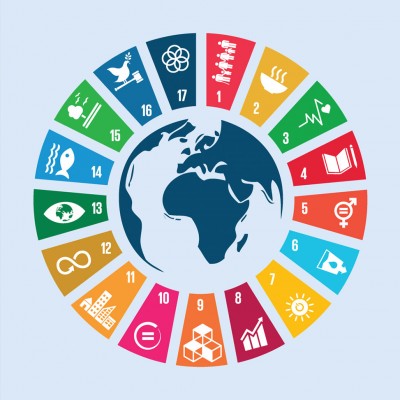
Leading this push for change are, of course, the voices of incredible activists around the globe. These activists are advocating for an improved world which is rebuilt in line with the UN’s Global Goals, the 17 sustainable aims for 2030 agreed upon by the UN’s member states in 2015. These goals, which include the achievement of gender equality and the provision of clean drinking water and sanitation for all, are more important than ever as we look towards a new post-Covid-19 world.
In the face of the ongoing inequalities which have been exposed and worsened by the current pandemic, and the need to build back better, it’s clear that activism is more important than ever. With this in mind, Stylist sat down with activists Vanessa Nakate, Trisha Shetty and Amika George following their appearance on the Activism, Actually panel at LIONS LIVE to talk the future of activism, the power of social media, and what needs to come next.

Vanessa Nakate is an activist from Kampala, Uganda. Her work focuses on the impact of climate change across Africa and demanding global action in the face of the climate crisis. During the pandemic, Nakate has moved her weekly #FridaysForFuture protests online, and is working to raise awareness about the need for a green economic recovery post-coronavirus.
“During the pandemic, I’ve seen so much vulnerability in various countries in regards to how people access basic needs, like food, water, health facilities, shelter, among others. And yet in this period, the government has tried to help them. It made me realise that the government is actually capable of helping people to live in a much better way. So my hope for the future is to see the vulnerable stop being vulnerable, and seeing that people can have access to these basic needs, so that even when such a crisis or epidemic happens, people have food to eat, water to use, and they can access health facilities in an easier way.
“I also really want the government to build back in green recovery, because we cannot afford not to be sustainable. I feel like there is much that needs to change to ensure that we put the planet and the people over profits and can build an environment that ensures protection of people’s wellbeing, and sustainability is the key to that, from my point of view.
“We know change is possible because the pandemic has shown us that it is possible”
“We need to understand that the climate crisis has not gone on a break and people shouldn’t forget that, before this current pandemic, we already had a crisis going on – and it is still here, destroying many people’s lives.
“We know change is possible because the pandemic has shown us that it is possible – it is now about the will of the leaders and we need to push them to the point when they will take these actions. They’re talking so much about going back to normal, but then when you look at our ‘normal,’ many people are still living in a crisis.
“I think that social media is very helpful when it comes to activism and creating impact. When I started with my activism, I would share what I was doing in the streets or at Parliament by taking photos and sharing them on social media. And that is how people in my country started getting to know about my work, especially young people. So social media actually creates impact in that it inspires other people when they see your activism.
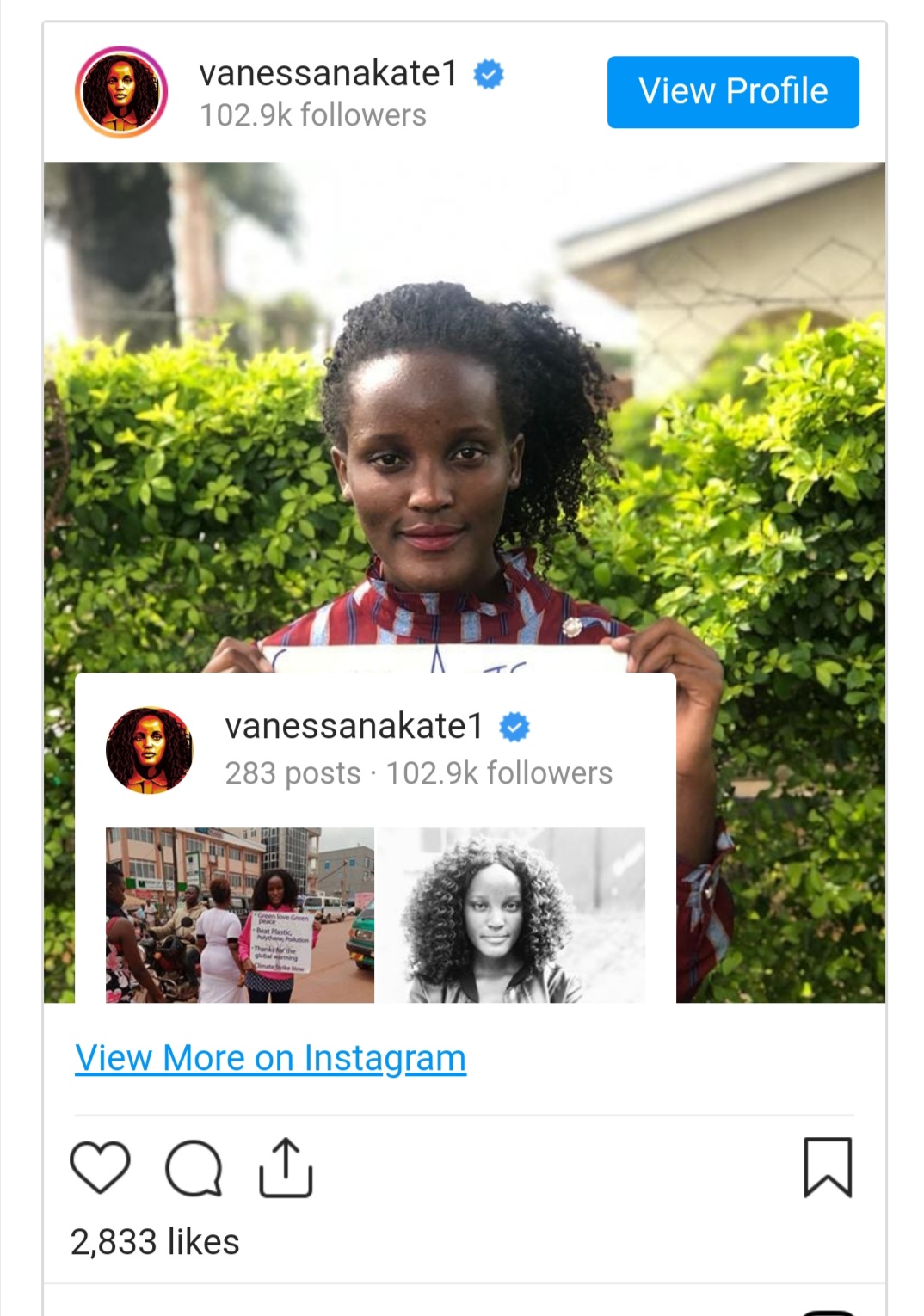
“You can clearly see that when Greta started the climate movement, she shared her photos on social media, and that is how people started getting involved and getting inspired. And I think with social media, especially with Twitter, where you can message politicians or leaders, I think it can really create so much impact – especially when you’re campaigning against a specific thing, for example, a new investment in the fossil fuel industry. Physical activism might have much more of an impact, but that does not exempt the importance of social media.
“To continue the momentum in activism post-Covid-19, we need to realise that the momentum is really in our voices, our platforms and what we speak about. People often talk about not having the resources to do activism, but I believe that the greatest resource that someone can have in activism is using their voice to speak up against any kind of injustice that they see in society. We have so many problems across the world, but if you resonate with a specific one, and you choose to fight for that cause, then your voice is important and your platform is important.
“For those people who would like to get involved in activism, I wouldn’t tell someone to start from scratch, but to join an already growing movement and get involved in the actions that other activists are carrying out, such as protests. No one should feel too small or too little to do that. Because at the end of it all, it’s not about the resources that we have, it’s about the message that you’re trying to put across and the lives that you’re trying to change.”
Trisha Shetty, social activist and founder of SheSays

Trisha Shetty is a social activist and lawyer from Mumbai, India. Her non-profit organisation SheSays works for gender equality through youth and civic-society engagement, and works on issues including public safety, education and sanitation through a gender-sensitive lens. During the pandemic, her activism has been limited by a crackdown on protest and dissent in India.
“What I’ve noticed globally during the pandemic, is a sense of recognition of inequality in a way people haven’t before, and a greater sense of service to our community and society happening among young people. You know, Amika, me and Vanessa – we identify as activists –but even those who didn’t before the pandemic, have wanted to serve their community during this time. I hope everyone continues with that sense of service and the recognition that we need to do everything we can to demand for an end to inequality.
“Post lockdown, I hope people don’t go back to business as usual. I hope the global community realises that democracy is in crisis, globally. I hope that we realise we need to double down on being watch guards for our leaders, and demand that they fulfil their duties to us as citizens. I hope that as citizens, we continue to be active in safeguarding democratic institutions. And I truly hope we do all of this with a sense of urgency where we feel like our house is on fire.
“We need to juggle everything: we need to live on with our lives while demanding better from ourselves, from our world leaders, and for people and for planet. So that’s what I hope – a doubling down on solidarity, on commitment to the Global Goals and holding government and leaders accountable to deliver on the goals.
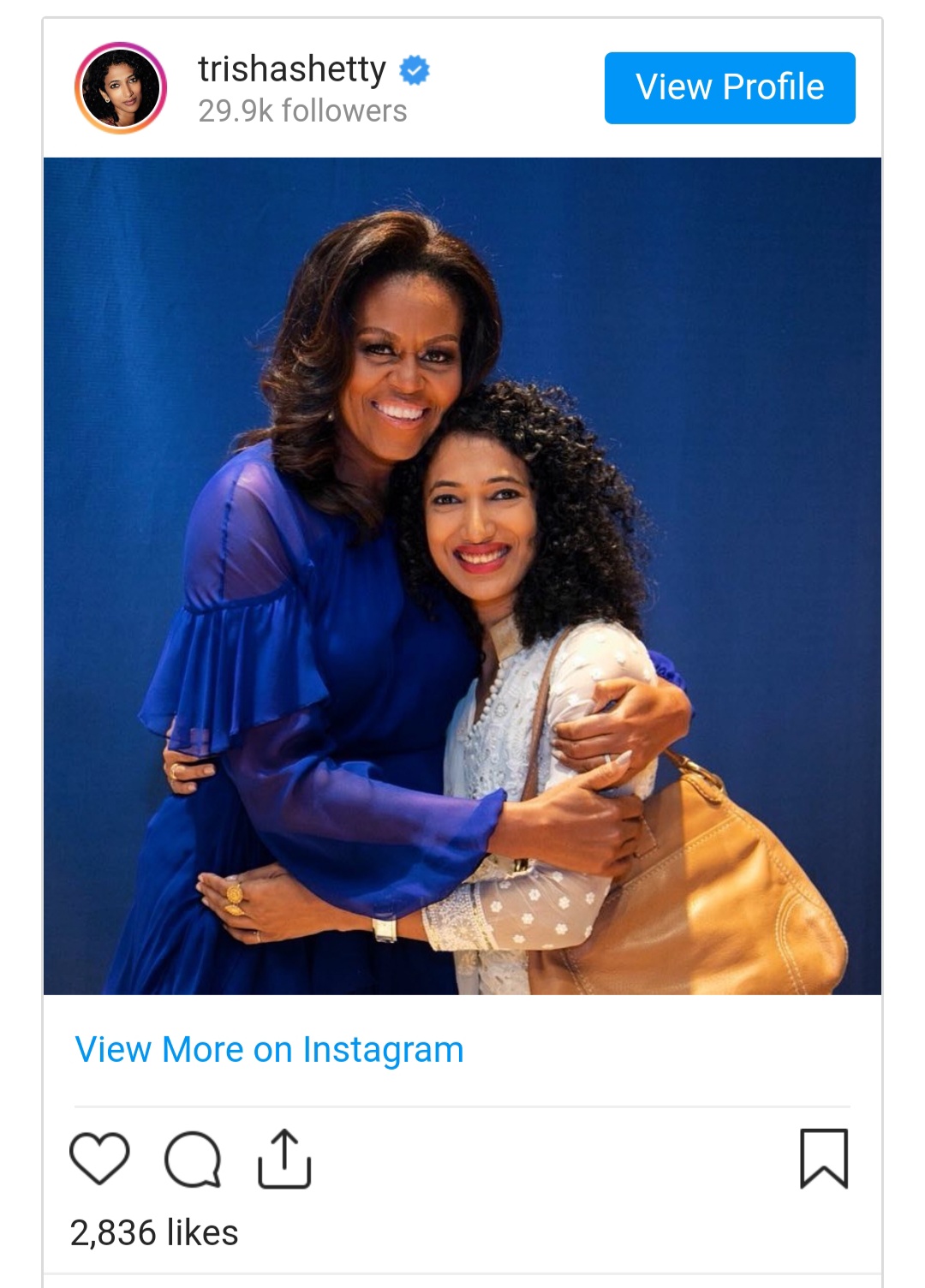
“What we’re currently seeing is not just a suspension on physical activity and economic activity, we’re also seeing a bigger attack on human rights than ever before. In India you can’t really get on the streets and protest like you’ve been seeing [with the Black Lives Matter protests] in America, so seeing the uprising there has brought about some complex emotions.
“In my country, we’re seeing a complete suppression of dissent. We’re seeing activists and human rights defenders being arrested under draconian laws, and we’re not able to take to the streets because of health concerns, so all we can do is raise our voices on social media.
“I really resonate with what Vanessa said in terms of stressing the importance of physical presence, but I do think social media can be incredibly helpful. I just go back to a personal incident. Before lockdown, I was providing pro bono legal services (I’m a lawyer) to lawful peaceful protesters who were getting detained by the police. But when I showed up at the police station to help three detainees I got unlawfully detained. Even though I showed my legal credentials, they tried to put me under the same charge as the other detainees and they wouldn’t let me leave.
“But luckily I held on to my phone, and I had the presence of mind to instantly tweet and go on Instagram and share updates. And within one hour, there was so much pressure built through my social media networks of people amplifying the message calling for my release and the police station I was detained at got hundreds of calls, from politicians and influential people to insist that they released me.
“I’m fortunate where I have the kind of access that I do, not just in terms of having access to the platforms, but having access to the influential people within the platform, because it’s not lost on me that when other detainees who don’t have the kind of access that I do wouldn’t be able to do the same thing.
“With the Global Goals, we keep talking about the sense of urgency, the decade of delivery, leave no one behind and how we’re all connected – and there is no better connection than social media. I think this moment is forcing us to be more inclusive – more than just tokenism – and it’s really forcing us to unlearn how we have been exclusionary in our activism, and demanding we do better as activists, that’s been a big lesson for me.
“I hope we hold ourselves accountable to do better in service of others, and I hope that we continue to demand better from our governments – with a sense of urgency”
“I find it quite amusing when people say ‘is it a moment or a movement’. Because truly what are you talking about? We’re talking about causes, right? Is hunger a moment? Is abuse a moment? Is abject poverty a moment? This is not a moment, this is reality. So it’s a moment or a movement based on how much you hold yourself accountable, to do better to serve others, as well as to demand accountability from the structures that were built to serve your community.
“So I hope we hold ourselves accountable to do better in service of others, and I hope that we continue to demand better from our governments – with a sense of urgency. If we do that, it won’t be a moment – we will live in the reality of everyone around us and demand that this is a movement that leads to systematic and structural change.”
Amika George, founder of Free Periods

Amika George is an activist from London, England, whose Free Periods campaign persuaded the UK government to provide free menstrual products in all English schools and colleges from early 2020. During the coronavirus lockdown, she has campaigned to have this provision continue during school closures and is working to raise awareness of period poverty across the UK, which has worsened in the pandemic.
“I think there is this idea that, for a lot of people, what we had before the pandemic was fine. And because we didn’t really question things in the way we are now, I haven’t really seen a commitment or enthusiasm for completely rebuilding. But I think the Black Lives Matter movement has reminded us of the need to do just that, because now that we’re talking way more about it inequalities – inequalities before the pandemic but also inequalities that are continuing – we’re able to talk about really stripping things down and rebuilding and building back better.
“It’s funny because the pandemic has become quite a divided thing in terms of how different governments are responding to it on a national level – who can lower the debt, who’s doing lockdown in this way, who’s lifting lockdown in another way. But actually, the Global Goals show that the leaders should have the same priorities regardless of which nation they’re from, and that the 17 goals should be prioritised by every single government.ADVERTISEMENT
YOU MAY ALSO LIKE
Free Periods’ Amika George on what’s next in the fight against period poverty
“In terms of our relationship with politics, as young people, and as activists, I think, we need to have far more prominent role to play in the new world. I don’t think we can go back to relying on the hierarchy of power in which we trust politicians to make decisions for us. Actually, it needs to be way more of a dialogue and it needs to be us holding them accountable to prioritise the issues that we care about.
“In this way social media is very important – without social media my Free Periods campaign definitely would not have been possible. I started when I was 17 and I don’t think I even considered a different way of activism – when I first wanted to do something, my instinct was to post on Instagram or to send a tweet to my local MP, and so I think it’s really essential to everything that Free Periods has achieved.
“Looking back, we did do the protest as well, so it was reinforced by that, but still, they definitely go hand in hand. For example, our protest would not have been possible without the kind of publicity and awareness that we raised using the internet – every single person who was there was there because they’d seen an Instagram post or a tweet, and it was being shared everywhere. And that kind of reinforced this collective idea that we’re all in this together.
“Older people often like to dismiss young people’s activism as clicktivism or slacktivism. But actually, it can be it can often be more effective than physical protest”
“But the main thing looking back that I realised is that social media for so many young activists is a lifeline in terms of achieving change. For me, you know, I started when I was 17, I couldn’t even vote in this country, and if you look at the British Parliament, it’s not at all really inclusive or welcoming of anyone under the age of 30. So youth activism has to, in many ways, take place online just because there’s not really much else that we can do.
“Older people often like to dismiss young people’s activism as clicktivism or slacktivism. But actually, it can often be more effective than physical protest.
“Right now, it feels like all these inequalities that have been festering for so long have reached the pinnacle, and we’re all talking about them and protesting about them, either physically or online. And these things all now feel urgent. So when we go back and realise how embedded and systemic these inequalities are, there’s no denying that this has to be more than a moment, and we need to recognise that this is something that affects everybody and everyone has to play a part in building by better. It can’t be up to the people in power.

“When you realise the interconnectedness of all the inequalities that we need to dismantle going forward – when you realise that economic inequality is gendered, and racial inequalities are also gendered and linked to economic inequalities, etc, you realise these issues shouldn’t be dealt with according to certain government departments or ministers or community groups of activists, they need to be taken as a whole.
“I also think there needs to be more intergenerational activism and collaboration, we need to connect with the people who are making the decisions because that’s the way that these institutions were written. And make sure that they’re doing it according to the world that young people want to live in, because ultimately it will be us who deal with it in the future.”






 Maheen Khan